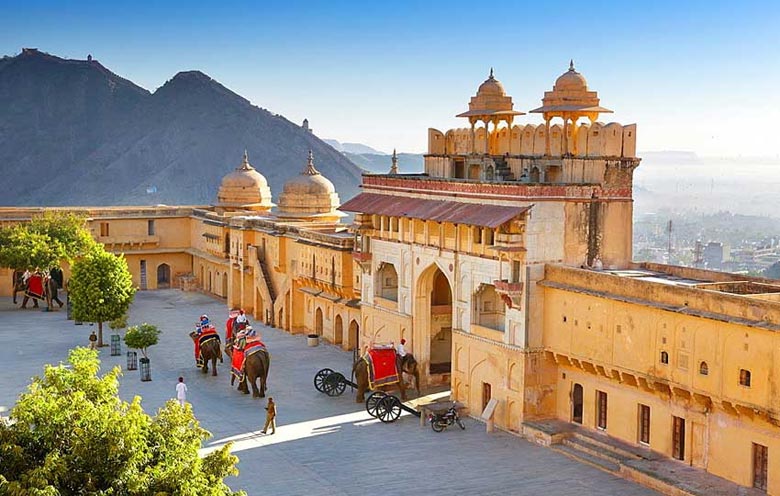
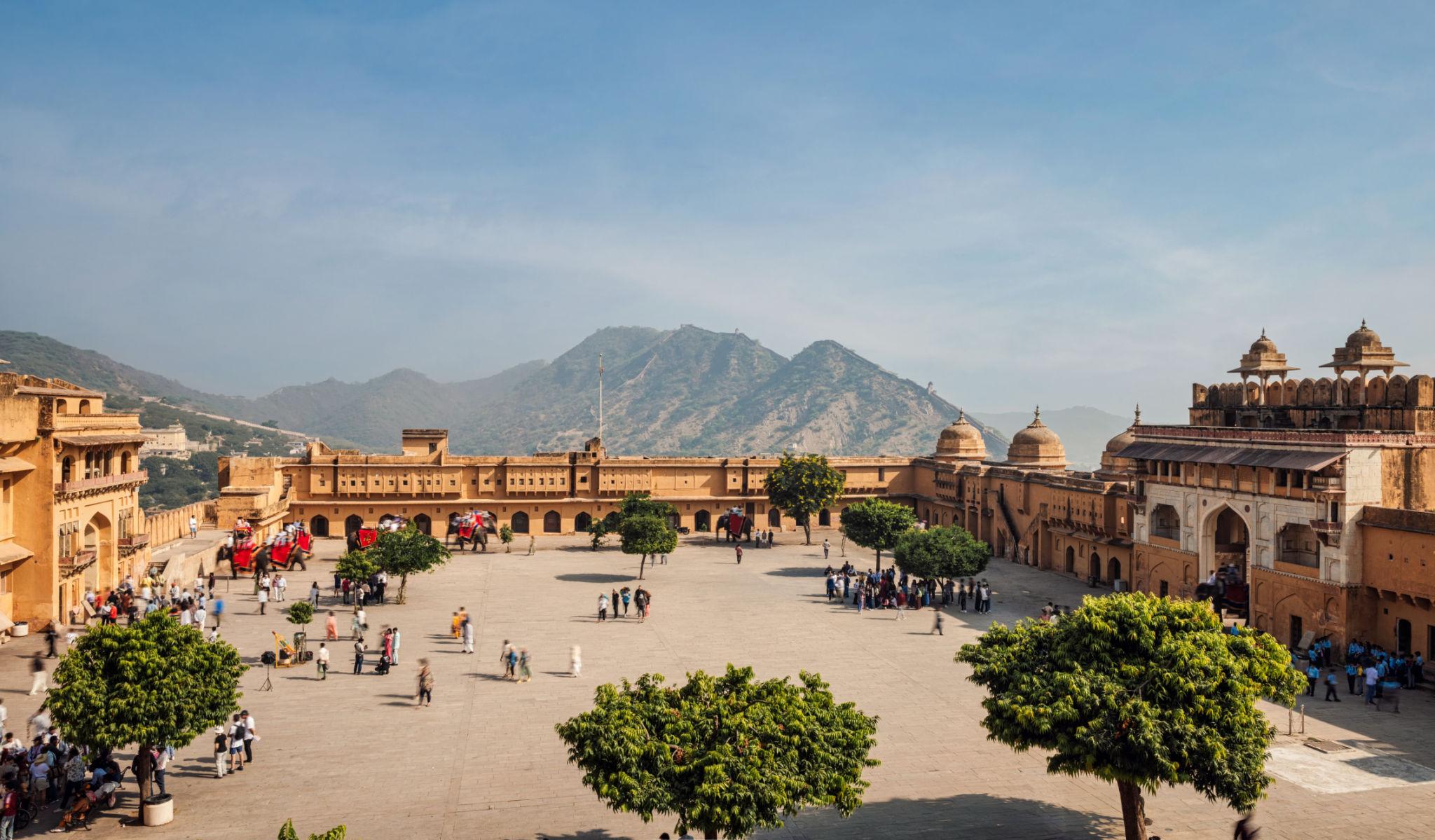
Amer Fort gets you on the scale before anything else does. You're driving up the hill from Jaipur and the walls just keep appearing above the section you can already see, there are more walls, more towers, more ramparts. By the time you enter Jaleb Chowk, the main courtyard, you're already inside something much larger than you anticipated from the road.
The fort sits 11 km from central Jaipur and is, in practice, more palace complex than defensive fort though the fortifications are real and substantial. Construction started under Raja Man Singh I in 1592 and continued for nearly two centuries under successive rulers. That timeline explains why the complex feels like several architectural sensibilities layered on top of each other: defensive, heavy stonework giving way to increasingly refined, Mughal-influenced interiors as you move deeper in.
History and What the Architecture Tells You
The most interesting thing about Amer Fort isn't any single room or feature it's how the building evolved with its rulers over time. The thick outer walls and massive gateways of the early construction reflect a period when this was a working military stronghold. The later additions, particularly the rooms built by Mirza Raja Jai Singh in the 1630s, feel almost ornamental by comparison: mirrored ceilings, delicate inlay work, rooms designed around aesthetics rather than defense.
The contrast is the point. These were rulers who built fortifications when they needed to and pleasure pavilions when they could afford to and the fort preserves both impulses in the same complex, separated by a few hundred meters of corridor and about sixty years of history.
For nearly two centuries before Jaipur was established as the new capital, this was the principal residence of the Rajput Maharajas. The scale makes sense when you understand that.
Entering the Fort
Most visitors come through one of two gates. Suraj Pol (Sun Gate) faces east and opens directly into Jaleb Chowk; Chand Pol (Moon Gate) is the more commonly used vehicle entrance. Both lead to the same place.
Suraj Pol (Sun Gate)
East-facing main entrance
Primary entry on foot
Chand Pol (Moon Gate)
Western vehicle entrance
Most commonly used
Jaleb Chowk
The main entry courtyard
Where victorious armies assembled
Jaleb Chowk is a lot larger than people expect. This was the fort's working square armies assembled here, livestock were kept here, it was the main gathering point for the entire complex. The stables along the eastern side are still visible. Standing in the middle of it at 8 AM before the tour groups arrive gives you a sense of the space that you lose once it fills up.
The Rooms Worth Your Time
1. Sheesh Mahal
The mirror palace is the most talked-about room in the fort, and it earns the attention. The walls and ceiling are covered entirely with small convex mirrors set into plasterwork, and when a guide holds up a single flame inside, the reflections multiply across every surface simultaneously. It's theatrical and slightly absurd and genuinely impressive one of those architectural effects that photographs poorly but works completely in person.
Getting a photograph without other tourists requires either arriving right when the fort opens or waiting with patience. The room draws a crowd consistently throughout the day.
Sheesh Mahal the mirror work in person is more disorienting than any photograph suggests
2. Sukh Niwas
The "Hall of Pleasure" was built with a water channel running through it cool water flowing through the room brought the temperature down naturally, a practical solution to Rajasthan summers in the era before mechanical cooling. The engineering is elegant and the result is a room that remains noticeably cool even on warm days. Worth a few minutes to appreciate the thinking behind it.
3. Diwan-e-Aam
The hall of public audience is where the Maharaja held open court commoners could approach with petitions and grievances. The architecture communicates authority deliberately: elevated platform, grand columns, an arrangement that makes the position of power obvious from anywhere in the room.
4. Zenana Quarters
The private residential section for royal women is built with a layout that ensured visual privacy between different apartments while maintaining the ability to access shared courtyards. The arrangement tells you something about how these spaces were actually used and managed it wasn't simply "the women's area" but a designed system for organizing multiple households within a single complex.
5. Underground Passages
Amer is connected to Jaigarh Fort above through hidden underground passages a strategic link that allowed movement between the two forts without exposure. A restored section of the tunnels is accessible to visitors. It's a short walk but worth doing for the tactile experience of the actual stone and the sense of the fort's defensive planning.
The Evening Sound and Light Show
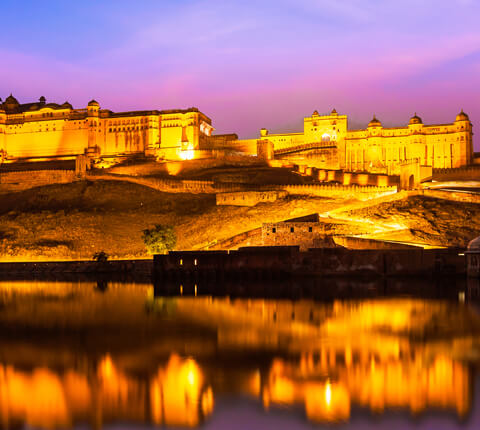
After sunset, Amer Fort runs a sound and light show that narrates the history of the fort against the illuminated backdrop of the palace walls. It runs in Hindi and English on alternating days check the schedule before you go. The script is earnest and the production values are what they are, but the setting compensates for everything. The fort lit up at night looks genuinely different from the daytime version, and the show gives you a coherent story to anchor the specific rooms you saw during the day.
A Few Photos from the Complex
When to Visit and How Long to Stay
October to March the only real answer
Summer at Amer is unpleasant. The sandstone holds heat, the courtyards have limited shade, and by 11 AM you'll be looking for an exit. October through March, the same spaces are comfortable even at midday.
Time of day: Arrive by 8 AM if possible. The light on the sandstone in the early morning is better for photography and the popular rooms particularly Sheesh Mahal are still manageable crowd-wise. By 10 AM on weekends, the fort is significantly busier.
How long: Two hours is the minimum if you're moving through quickly. Three hours lets you actually look at things rather than just passing through them. If you're doing the evening show as well, plan your day around that separately.
Timings and Entry
- Daily opening hours: 8:00 AM to 5:30 PM
- Sound and Light Show: After sunset timings vary by season, confirm before you go
- Entry fees: Separate rates for Indian and foreign visitors; photography fees may apply for video cameras
- Audio guides: Available in multiple languages at the entrance worth getting if you want historical context without hiring a guide
Getting There
From Jaipur city, Amer is straightforward to reach by any method.
City Bus
Regular buses operate from Ajmeri Gate and MI Road cheap (roughly ₹10–15) and about 40 minutes. The most economical option if you're comfortable with buses.
Auto-Rickshaw or Taxi
More convenient for families or if you're carrying a lot. Agree on a round-trip price with waiting time before you leave it should be straightforward to negotiate and saves hassle at the other end.
Self-Drive
Parking near the fort entrance is available and reasonably organized. The road up the hill is manageable in a standard car.
Tips for the Visit
- Comfortable footwear is essential: Uneven surfaces, stairs, and significant walking throughout the complex. This isn't a place for dress shoes.
- Water: Carry it. The fort is large and there are limited opportunities to buy drinks inside.
- Consider a guide: The historical detail behind specific rooms and carvings is genuinely interesting, and a good guide makes the difference between a building and a story.
- The elephant rides: Available near the entrance but increasingly controversial from an animal welfare perspective the steep hill walk is hard on the animals. Most visitors now use the jeep service or walk.
- Sun protection: The courtyards are largely open. Sunscreen, hat, and sunglasses if you're visiting in the warmer months.
- Don't skip the upper terraces: The views over Maota Lake from the upper levels are among the better perspectives you get on the Amer valley, and most people miss them.
The Honest Verdict
Rajasthan has forts that are more intact, more remote, and less visited than Amer. But Amer gives you the most complete picture of how Rajput royalty actually lived the full spectrum from heavy defensive architecture to rooms built entirely for pleasure and display. The Sheesh Mahal alone is worth the trip, but the fort earns its reputation across the whole complex, not just in its most famous room.
Give yourself the time to actually see it. The people who rush through Amer come away having covered the ground without understanding the place. The quiet corners, the rooftop terraces with lake views, the corridors between sections these are the parts of Amer that stay with you. If you're planning a full Jaipur day, pair an early morning at Amer with Hawa Mahal in the afternoon and Birla Mandir in the evening it covers the city's range well without doubling back.
Personal Experience
The first glimpse of Sheesh Mahal's mirror work, when a guide lights a single match inside, is the moment most visitors remember the reflections multiply instantly across the entire ceiling, and no photograph fully captures it.
How Much It Costs (Budget Breakdown)
- Auto or taxi from Jaipur: ₹300–500 round trip (bus ₹10–15 one way)
- Entry ticket: separate Indian/foreign rates check current pricing
- Audio guide: modest additional charge
- Jeep ride up the hill (optional, replacing the elephant ride): ₹250–350
- Sound and light show: separate ticket, evening only
- Typical half-day budget excluding the show: ₹500–900
Parking Experience
Paid parking is available near the base of the hill close to the entrance gates. It's reasonably organized but fills up by mid-morning on weekends.
Crowd Timing
Weekends and 10 AM onward on any day are busiest. Arriving by 8 AM gives you Sheesh Mahal and Jaleb Chowk with minimal crowds.
What to Avoid
Avoid the elephant ride given animal welfare concerns the jeep service or walking up is the better option. Don't skip water, since options to buy drinks inside are limited. Avoid midday visits in summer.
Hidden Spots
The upper terraces overlooking Maota Lake are missed by most visitors rushing between the famous rooms. The Zenana quarters' quieter courtyards, away from the main tourist flow, are worth the extra few minutes.
Local Food to Try
Small stalls near the parking area serve kachori and chai. For a proper meal, better options are back in Jaipur city rather than right at the fort.
Is It Suitable for Families?
Uneven surfaces and stairs throughout make it moderately demanding for elderly visitors or very young children. The jeep ride up helps reduce the walking load for those who need it.
Best Photography Points
Jaleb Chowk at 8 AM before crowds arrive, Sheesh Mahal's mirror ceiling (early or late in the day for fewer people in frame), and the upper terrace view over Maota Lake.
Frequently Asked Questions
What are the entry fees for Amer Fort, Jaipur?
Entry fees are set separately for Indian nationals and foreign visitors, with foreign rates significantly higher. Photography fees may apply for video cameras. Audio guides are available for an additional charge. Confirm current rates before your visit as these are updated periodically.
How much time do you need at Amer Fort?
Two hours is the minimum if you're moving through the main areas quickly. Three hours lets you actually spend time in the key rooms and take in the rooftop terraces and views rather than just passing through. The evening sound and light show should be planned separately.
What is the best time of year to visit Amer Fort?
October to March for comfortable weather. Summer at Amer is unpleasant the sandstone holds heat and the courtyards have limited shade. Arrive by 8 AM in any season to get ahead of tour groups and catch the best morning light on the sandstone.
Is the Amer Fort sound and light show worth attending?
Yes, particularly if you've done the daytime visit. The fort lit at night looks genuinely different, and the narration connects the specific rooms you visited during the day into a coherent story. It runs in Hindi and English on alternating days check the schedule before going.
Is a guide necessary at Amer Fort?
Not essential, but recommended. The history behind rooms like Sheesh Mahal and how Sukh Niwas worked as a natural cooling system significantly enhances what you see. Audio guides available at the entrance are a good middle ground if you prefer exploring at your own pace.

My Rajasthan Vlog
Travel Writer & Rajasthan Explorer
Covering Rajasthan's forts, temples, and landscapes with a focus on the historical context that makes them worth understanding, not just visiting.