Most Jaipur itineraries treat Birla Mandir as an optional footnote something to see if you have extra time after the forts and palaces. That's a mistake. The temple is one of the better-designed modern buildings in the city, and the evening experience specifically is genuinely one of the most underrated things you can do in Jaipur.
The other thing most people get wrong is timing they go at midday and wonder what the fuss is about. Come back after 6 PM, when the lights come on, and you'll understand why this place keeps appearing in travel photography from the city.
Background
The temple was built by the Birla family in 1988 part of a series of temples they've funded and constructed in cities across India over several decades. The Jaipur temple, dedicated to Lord Vishnu and Goddess Lakshmi, is considered by many to be the most architecturally successful of the lot. The setting helps: at the base of Moti Dungri Hill, with the old fortified palace visible on the hill above, and the city spreading out in every direction.
The Birla family also funded the Lakshmi Narayan temples in Delhi, Hyderabad, Bhopal, and Kolkata, among others. Each has its own character, but the Jaipur one has a location and a marble quality that the others don't quite match.
What Makes the Architecture Worth Examining
The entire structure is built from Makrana marble the same stone quarried from Makrana, Rajasthan that was used for the Taj Mahal, roughly 90 km from here. The quality is immediately visible when you look closely at the carved surfaces. The work is dense and precise.
What to Look For
Three Domes
Exterior silhouette, best from the gate
Proportioned to appear larger than actual scale
The Carved Panels
Hindu figures alongside philosophers from other traditions
Socrates, Buddha, and Christ among them
The Main Idols
Vishnu and Lakshmi, single-block marble each
Near-translucent quality in direct light
The carved panels on the exterior walls are worth spending time with. Hindu mythological scenes are expected, but the inclusion of figures from other philosophical and religious traditions Socrates, Christ, Buddha, among others is a deliberate statement about the temple's philosophy of universal harmony. You can read it as inspired or as eclectic depending on your inclination. Either way, it's unusual and worth noticing.
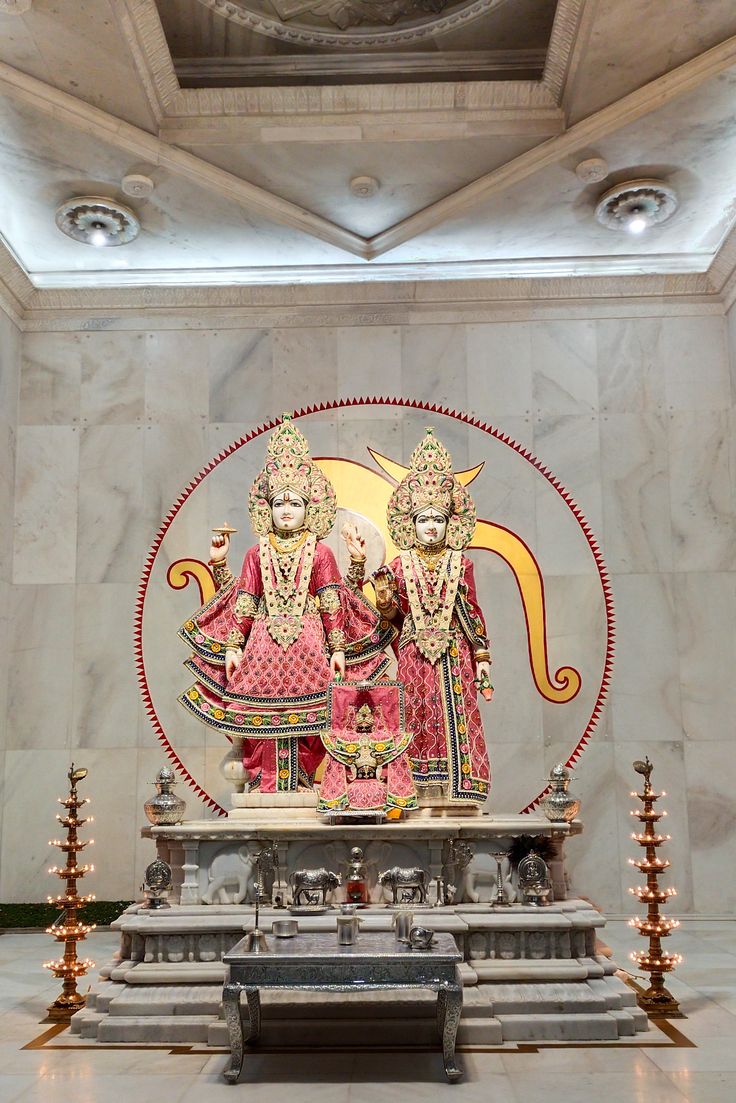
The main idols of Vishnu and Lakshmi inside are each carved from a single block of marble. When the sunlight falls at the right angle typically late afternoon before sunset the marble takes on a quality that's almost luminous. It's one of those effects that's better in person than in any photograph of it.
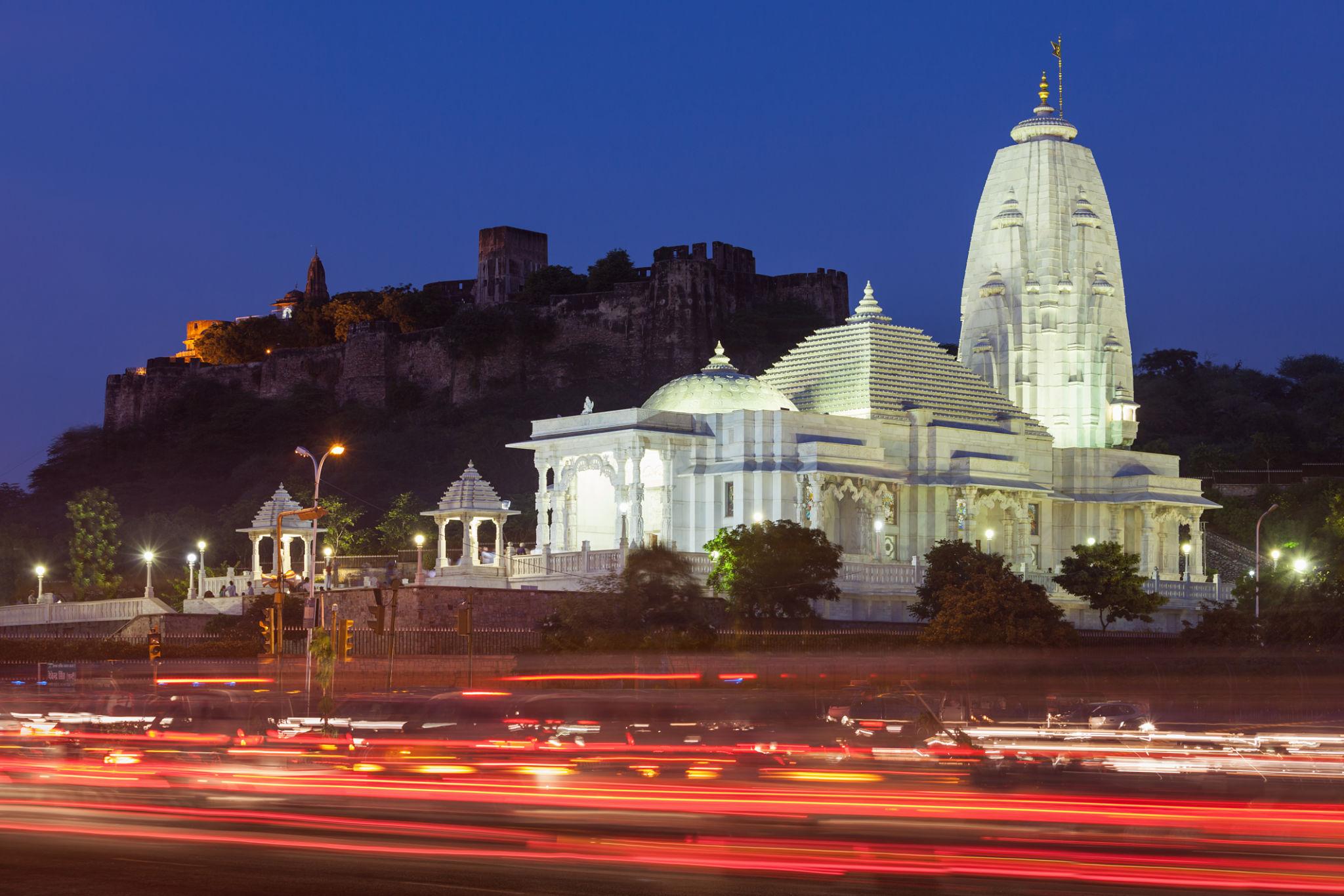
The temple from the entrance gate three domes and white Makrana marble
The Evening Visit
After about 6 PM, when the temple lights come on, the white marble transforms. The lighting is warm rather than harsh, and the reflections in the courtyard marble create a visual effect that's worth coming specifically for. The domes glow against the night sky in a way that daytime photographs never quite capture.
This is also when the atmosphere in the temple shifts the crowds thin slightly, the temperature drops, and the evening aarti fills the air with chanting that echoes off the marble courtyard. Whether you're religious or not, it's an affecting experience. The combination of the visual and the sound is hard to replicate elsewhere in Jaipur.
If you have one evening free in the city and you've already done the forts, come here instead of another restaurant. Stay for the aarti, walk the courtyard slowly, and give the marble the low light it deserves.
Location
The temple is on Jawahar Lal Nehru Marg, near Moti Dungri Hill. Centrally located, easy to find from anywhere in Jaipur. Moti Dungri Ganesh Temple sits five minutes away on foot worth combining if you have time, since the two together take about 90 minutes and the contrast between the old hilltop Ganesh shrine and the modern Birla Mandir is itself interesting.
Other Nearby Spots
- Moti Dungri Ganesh Temple short walk uphill
- Albert Hall Museum 10–15 minutes by auto
- Hawa Mahal and City Palace in the old city, 20–25 minutes away; excellent for a morning visit before the Birla Mandir evening session
- Amer Fort 15 km from Birla Mandir; works best as a morning destination, pairing well with an evening here
- Nahargarh Fort visible from the Birla Mandir area on the ridgeline above
Visiting Hours
October to March for comfortable weather
Jaipur summers are extreme. Morning and evening are the practical windows year-round, but winter makes the courtyard genuinely pleasant at any hour.
Opening Times
- Morning session: 8:00 AM to 12:00 PM
- Evening session: 4:00 PM to 8:00 PM
The temple closes in the afternoon and reopens for the evening session. Plan accordingly arriving at 1 PM means you'll be turned away and have to come back.
Photography
Exterior photography and the gardens and courtyard are all fine. The inner sanctum area restricts cameras check with temple staff at the entrance. The best exterior shots are from the main gate, which gives you the full façade with the three domes. The reflection pool near the entrance, when there's no wind, gives a near-perfect mirror image of the main dome worth waiting a minute for if the surface is still.
Night photography after the lights come on is when the temple is most photogenic. The white marble under warm lighting is a combination that works regardless of your camera.
What to Know Before You Go
- Remove footwear at the entrance to the main temple area
- Dress modestly covered shoulders and knees
- No photography inside the main sanctum
- Parking is available near the temple no shortage of space
- Entry is free for all visitors
- Prasad and small items available from shops outside the gate
- Spend at least 45–60 minutes rushing through the courtyard misses the point
The Honest Case for Visiting
Birla Mandir is free, well-maintained, and the evening session is under two hours from arrival to exit. In a city where most things cost money and take longer than expected, those two facts alone make it worth considering.
But the stronger case is the marble. The Makrana stone used here is the same material as the Taj Mahal, and while the building itself isn't in that category, the quality of the carving and the way the stone responds to light are genuinely worth experiencing. The evening visit the warm lighting, the aarti, the courtyard gives you one of the calmer, more memorable hours you can spend in Jaipur.
Personal Experience
Coming back after 6 PM specifically to see the marble under the evening lights, having dismissed it as a quick daytime stop earlier that return visit is what actually convinces people this place is worth it.
How Much It Costs (Budget Breakdown)
- Entry: free
- Auto from anywhere in Jaipur: ₹100–200
- Prasad or small offerings outside the gate: ₹20–50
- Typical visit cost: ₹120–250
Parking Experience
Ample free parking is available near the temple. Not a concern even on weekend evenings.
Crowd Timing
Evenings after 6 PM are busiest but still comfortable. Midday sees the fewest visitors but also misses the lighting that makes the evening worthwhile.
What to Avoid
Don't visit only at midday and skip the evening that's the most common mistake. Don't attempt photography inside the main sanctum. Don't arrive between 12–4 PM when the temple is closed.
Hidden Spots
The reflection pool near the entrance gate, when still, gives a near-perfect mirror image of the main dome most visitors walk past without noticing.
Local Food to Try
Small shops outside the gate sell prasad and basic snacks. For a real meal, the old city or nearby Jaipur restaurants are a short auto ride away.
Is It Suitable for Families?
Very easy a flat courtyard, no climbing, free entry, and a calm atmosphere make it comfortable for all ages, including elderly visitors and small children.
Best Photography Points
The main gate for the full three-dome facade, the reflection pool on a windless evening, and after 6 PM when the warm lighting transforms the white marble.
Frequently Asked Questions
Is Birla Mandir Jaipur free to visit?
Yes, entry is completely free for all visitors. There are no charges for the main temple, courtyard, or gardens. Small shops outside the gate sell prasad and offerings if you'd like them.
What are the opening hours of Birla Mandir Jaipur?
Morning session: 8:00 AM to 12:00 PM. Evening session: 4:00 PM to 8:00 PM. The temple closes in the afternoon arriving at 1 PM means waiting until the evening session reopens at 4.
Why is the evening visit better at Birla Mandir?
After about 6 PM, the warm lighting transforms the white Makrana marble in a way daytime visits never quite capture. The evening aarti fills the marble courtyard with chanting, the temperature drops, and the whole atmosphere shifts. It's genuinely one of the calmer hours you can spend in Jaipur.
Is photography allowed at Birla Mandir?
Exterior and courtyard photography is permitted. Photography inside the main sanctum (where the Vishnu and Lakshmi idols are) is restricted confirm with temple staff at the entrance. The reflection pool near the main gate and the marble exterior under evening lighting are particularly worth photographing.
What else can I combine with Birla Mandir in Jaipur?
Moti Dungri Ganesh Temple is a five-minute walk uphill. For a full day, Amer Fort works well in the morning (arrive by 8 AM), with Birla Mandir as an evening stop after. Hawa Mahal is in the old city, about 20–25 minutes away by auto.

My Rajasthan Vlog
Travel Writer & Rajasthan Explorer
Covering Rajasthan from the inside the practical details, the context behind the places, and an honest account of what's worth your time.