The first thing you notice about Hawa Mahal isn't actually the building itself it's how difficult it is to photograph properly from the street. The façade faces east, which means morning light is ideal, but by then the road below is already full of flower sellers, auto-rickshaws, and tourists jostling for space on a footpath that wasn't designed for this volume of people.
That street-level chaos is, in a way, exactly appropriate. Hawa Mahal was built to look out at precisely that kind of street activity the processions, the festivals, the daily commerce of the old city. It was designed for watching, not just being watched. The five storeys of screened galleries above you were full of royal women observing that same street, completely hidden behind the lattice.
History and the Reason This Building Exists
Maharaja Sawai Pratap Singh had Hawa Mahal built in 1799. The designer, Lal Chand Ustad, modeled the distinctive crown-like upper section on the mukut of Lord Krishna look at the top from the street and you can see the resemblance clearly. It was one of the more striking examples of architecture as devotional statement in 18th-century Rajasthan.
The building was constructed primarily for the royal women of the palace, who observed the purdah system and couldn't appear in public. The screened windows 953 of them gave them a completely unobstructed view of the street and city events below, while rendering them invisible to anyone looking up. Every major festival procession that passed along Sireh Deori Bazaar passed directly in front of this building. The women of the royal household had the best seats in the city and nobody outside knew they were watching.
The centuries since have reversed the dynamic entirely now the building is the thing being watched, from every angle, at all hours.
What Actually Makes the Architecture Interesting
Hawa Mahal's famous façade is essentially a screen the building is only about one room deep at the base, and the upper floors are little more than the screened galleries themselves. From the back, which most visitors never see, the structure looks completely different more utilitarian, less theatrical. The famous front is a piece of architectural theater designed specifically for the view from the street.
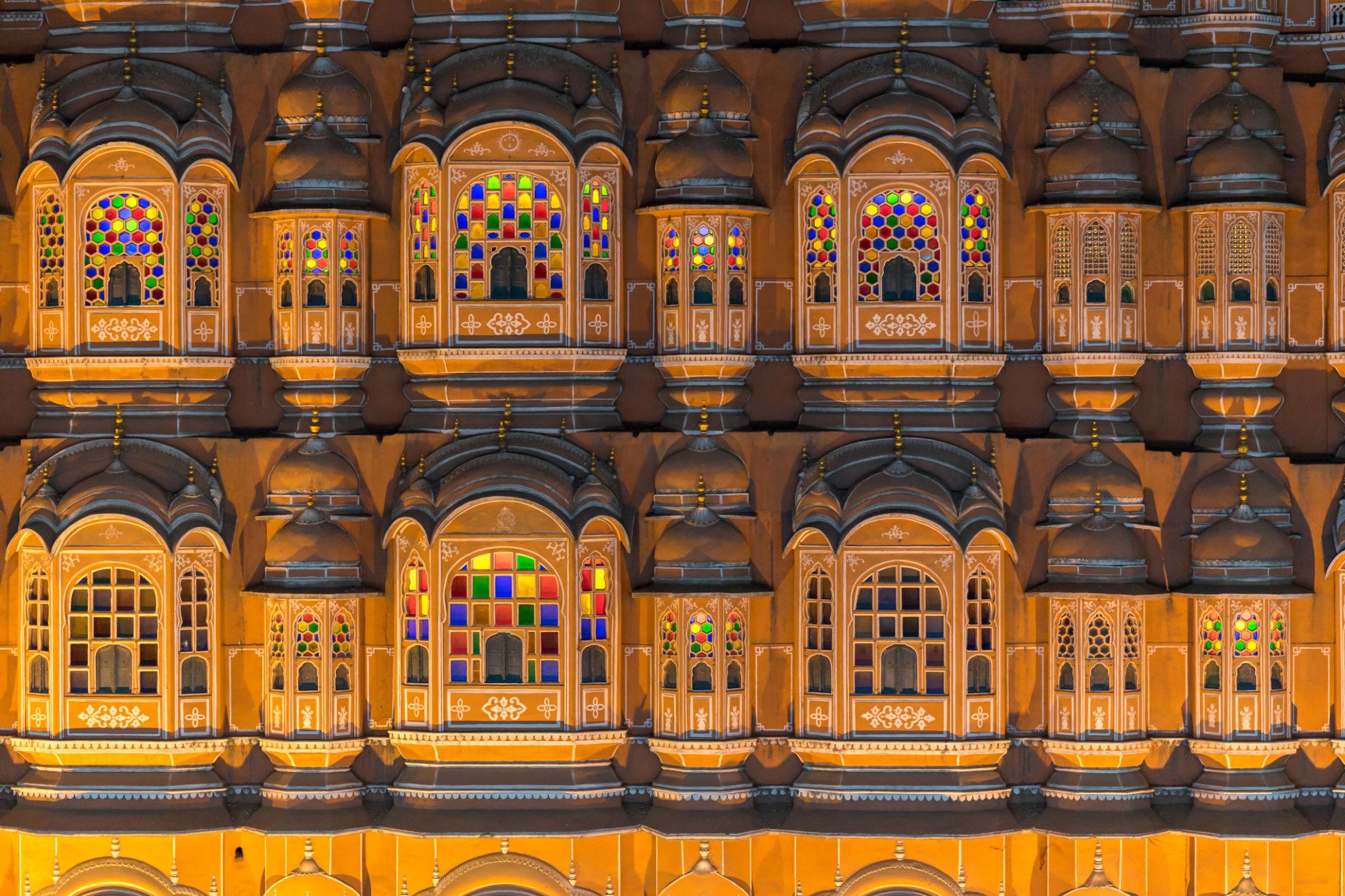
The 953 jharokhas the latticed windows do more than look decorative. They function as a natural ventilation system: air moving through the lattice creates a Venturi effect, and the cumulative result is an interior that stays noticeably cooler than the temperature outside. On a hot Jaipur afternoon, the breeze flowing through the upper galleries is genuinely pleasant. Whether the designers fully intended this climate effect or whether it emerged partly from the aesthetic logic of the latticework, the physics works out in the occupants' favor.
The Sandstone and the Color
Pink Sandstone
Matches Jaipur's old city palette
Earthy terracotta in real life
Five Storeys
No conventional staircase
Ramps connect the floors
953 Windows
Jharokhas in decorative latticework
Natural cooling and privacy
The "pink" of the Pink City is actually more of an earthy terracotta when you see it in person less pastel than photographs suggest. Hawa Mahal fits this palette exactly, built from the same red and pink sandstone used throughout Jaipur's old city. It would look strange anywhere else; here, it belongs completely.
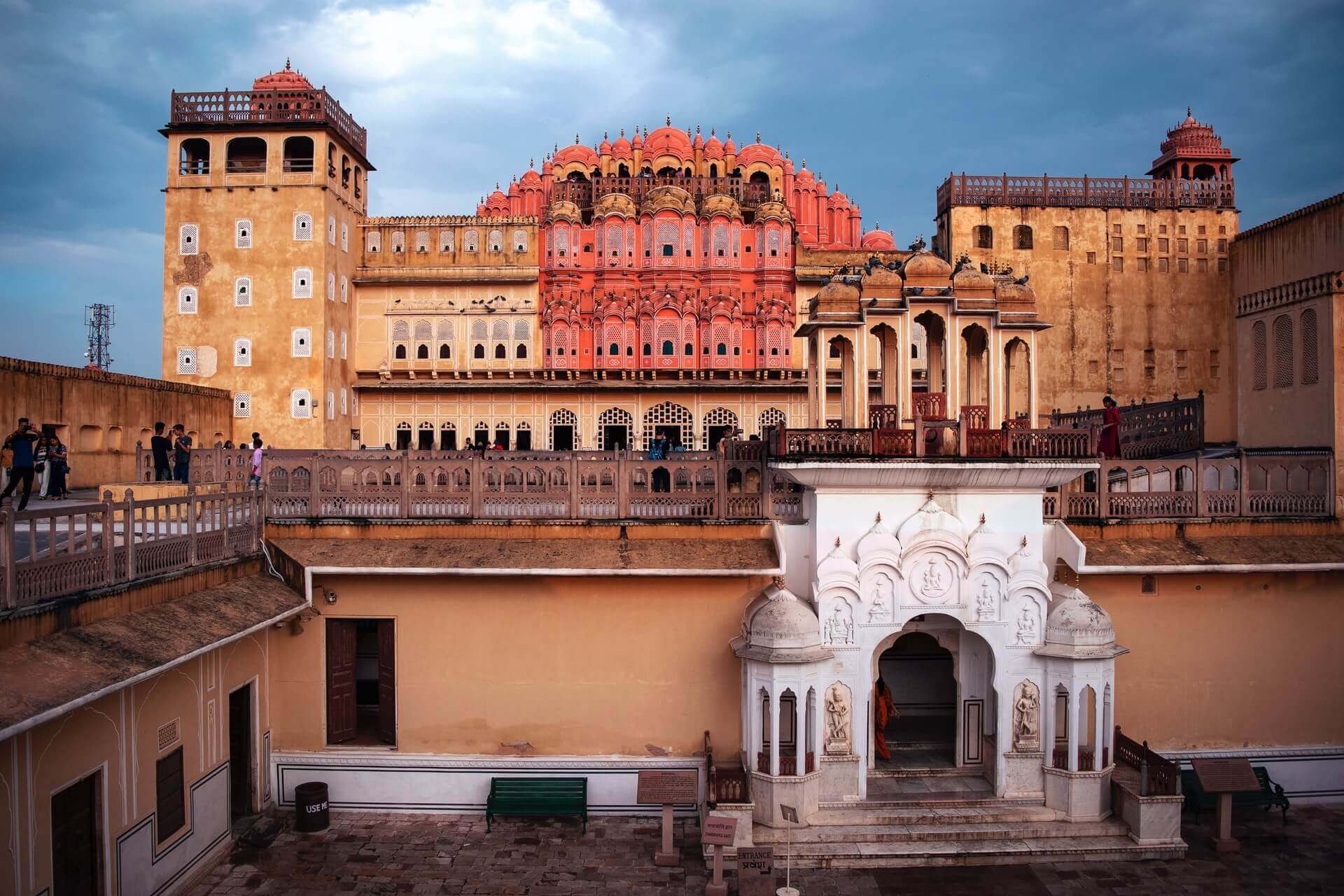
The east-facing façade catches morning light the best time to see the latticework in detail
Going Inside
Most visitors photograph the exterior and leave without going in. This is understandable the entrance isn't on the main façade side, which confuses people. You enter through a doorway on the back of the building that leads into a courtyard, then work your way up. The interior is less dramatic than the exterior, but it's worth an hour of your time for what it gives you.
Inside, the palace has small interconnected chambers, narrow passageways, and the ramps that connect the floors rather than stairs reportedly to make it easier for the royal women to move between levels in heavy clothing. The small museum on the lower floors has some miniature paintings and artifacts that give context to the Jaipur of Pratap Singh's era, though the collection is modest.
The upper floor galleries are where the building reveals its other side. Looking out through the lattice screens from inside, you understand instantly why this worked as a viewing gallery the intricate screen completely hides you, while giving a clear enough view of the street that you could watch a procession in detail. The experience of looking out from behind those screens, seeing the busy street below while remaining unseen, is genuinely atmospheric.
The View from the Top
The top-floor gallery gives you one of the better views over Jaipur's old city City Palace clearly visible, Jantar Mantar identifiable nearby, and the ridgeline of Nahargarh Fort in the distance. The perspective is particularly useful for understanding how the old city is laid out, which is easy to lose track of at street level where the lanes are narrow and don't follow obvious patterns.
Photography Practical Notes
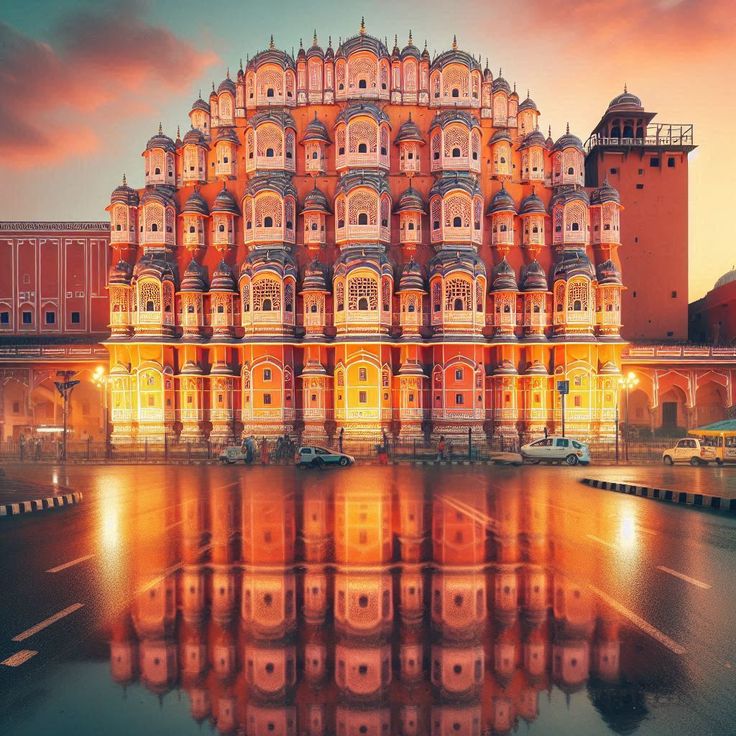
For the exterior façade, the rooftop cafés and restaurants directly across the street (there are several, all roughly at the same spot) give you the cleanest full-length shot of the building without the street chaos in the foreground. The upper floors of these establishments are usually open from early morning. Morning is the right time for this the façade faces east and is front-lit until around 10 AM, after which the light flattens.
Inside the building, photography is generally permitted except in the main sanctum area. The play of light through the lattice windows creates patterns on the interior walls that are worth photographing in their own right. The best versions of these shots happen around 8–9 AM when the eastern light is entering at a low angle.
Visiting Practically
Hawa Mahal sits in the heart of Jaipur's old city, within easy walking distance of City Palace and Jantar Mantar. If you're planning a day in the old city, combining all three makes sense logistically they're close enough to walk between, and the history of each connects to the others. For a full Jaipur day, start the morning at Amer Fort (arrive by 8 AM), spend the afternoon in the old city here, and end the evening at Birla Mandir when the marble lights up.
Best Season and Time
October to March for comfortable weather. Early morning on any day the light on the sandstone façade is best before 10 AM and the crowds haven't built yet. Avoid midday in summer; the old city streets around the building get extremely hot with limited shade.
Travel Tips
- Enter from the back of the building the main façade side has no entrance, which confuses people for longer than it should
- Budget at least an hour if you're going inside properly; 20–30 minutes if you're only seeing the exterior
- Comfortable footwear the ramps and interior are manageable but worn sandals make it harder
- Combine the visit with City Palace and Jantar Mantar nearby; they're all walkable from each other
- Check current entry timings and fees before you go they update periodically
- The interior is less dramatic than the exterior, but the view from the top galleries is worth it
Why It Still Matters
Hawa Mahal is one of those buildings that exists at the intersection of architecture, social history, and urban design. The engineering of the 953 screened windows as both a privacy mechanism and a natural cooling system is clever enough to be interesting on its own. The social context a building constructed specifically to allow royal women to participate in public life while remaining invisible is a window into a world that doesn't exist anymore and is worth thinking about while you stand there.
Most people photograph it and move on. The ones who actually go inside come away with a different relationship to the building. Five floors of history for a modest entry fee, in a city where most things cost more and deliver less.
Personal Experience
Most people photograph the facade from the street and leave going inside and looking out through the jharokhas from the royal women's perspective is what actually changes how you see the building.
How Much It Costs (Budget Breakdown)
- Entry: modest fee, separate Indian/foreign rates
- Auto from old city hotels: ₹50–100
- Rooftop cafe (for photos and chai): ₹100–200
- Typical visit cost: ₹200–350
Parking Experience
No dedicated parking right outside nearby paid lots exist in the old city area, or arrive by auto or rickshaw, which is more practical given the crowded street.
Crowd Timing
Mid-morning to afternoon is busiest with tour groups. Arriving right at 9 AM opening avoids the worst of it.
What to Avoid
Don't try to enter from the main facade side there's no entrance there, only confusion. Don't skip going inside just because the entrance is unclear. Avoid the street directly below at midday when it's most congested.
Hidden Spots
The upper floor galleries, where you can look out through the lattice screens unnoticed, are missed by most tourists who never make it past the ground floor.
Local Food to Try
Street food stalls in the surrounding old city lanes (Sireh Deori Bazaar) serve kachori and lassi. A short walk finds proper Rajasthani thalis in the old city.
Is It Suitable for Families?
The ramps instead of stairs make it easier for elderly visitors than a typical multi-storey monument. Manageable for children too, though the narrow passages can feel cramped with a stroller.
Best Photography Points
Rooftop cafes directly across the street before 10 AM for the front-lit facade, and inside, the light patterns through the jharokhas around 8–9 AM.
Frequently Asked Questions
What is the entry fee for Hawa Mahal?
Entry fees are set separately for Indian nationals and foreign visitors. The rates are modest Hawa Mahal is one of the better-value heritage experiences in Jaipur. Confirm current rates before your visit as these are updated periodically by the Archaeological Survey.
What are the opening hours of Hawa Mahal, Jaipur?
Generally open from 9:00 AM to 5:00 PM daily. Arriving between 8 and 9 AM is ideal the facade faces east and is front-lit only until around 10 AM. Arrive early for exterior photographs and go inside once the ticket window opens at 9.
Is it worth going inside Hawa Mahal?
Yes. Most visitors photograph the exterior and leave without going in the back entrance confuses people. Inside, the upper galleries let you look out through the lattice screens from behind, understanding exactly how the building worked as a royal viewing gallery. The rooftop view of Jaipur's old city is also one of the better vantage points in the city.
How long does it take to visit Hawa Mahal?
20 to 30 minutes if you're only seeing the exterior. One hour to go inside properly enough to work through the galleries to the top floor and back. Don't try to squeeze it into less if you want to actually understand what you're seeing.
Where is the best place to photograph Hawa Mahal from?
The rooftop cafes and restaurants directly across the street (Sireh Deori Bazaar) give you a clean full-length shot of the facade without street chaos in the foreground. The upper floors of these establishments are usually open from early morning. Shoot before 10 AM the facade is east-facing and front-lit only in the morning hours.

My Rajasthan Vlog
Travel Writer & Rajasthan Explorer
Writing about Rajasthan with a focus on the details that matter the history behind the famous buildings, the routes between cities, and the places worth slowing down for.