Most people driving the Jaipur–Ajmer highway spot Nareli Jain Temple at a distance and assume it's a government building under construction. The stepped white structure rising from the Aravalli foothills doesn't look like what you'd expect a temple to look like. But pull off the highway and drive toward it, and the scale of the complex becomes clear quickly and it's considerably more impressive up close than from the road.
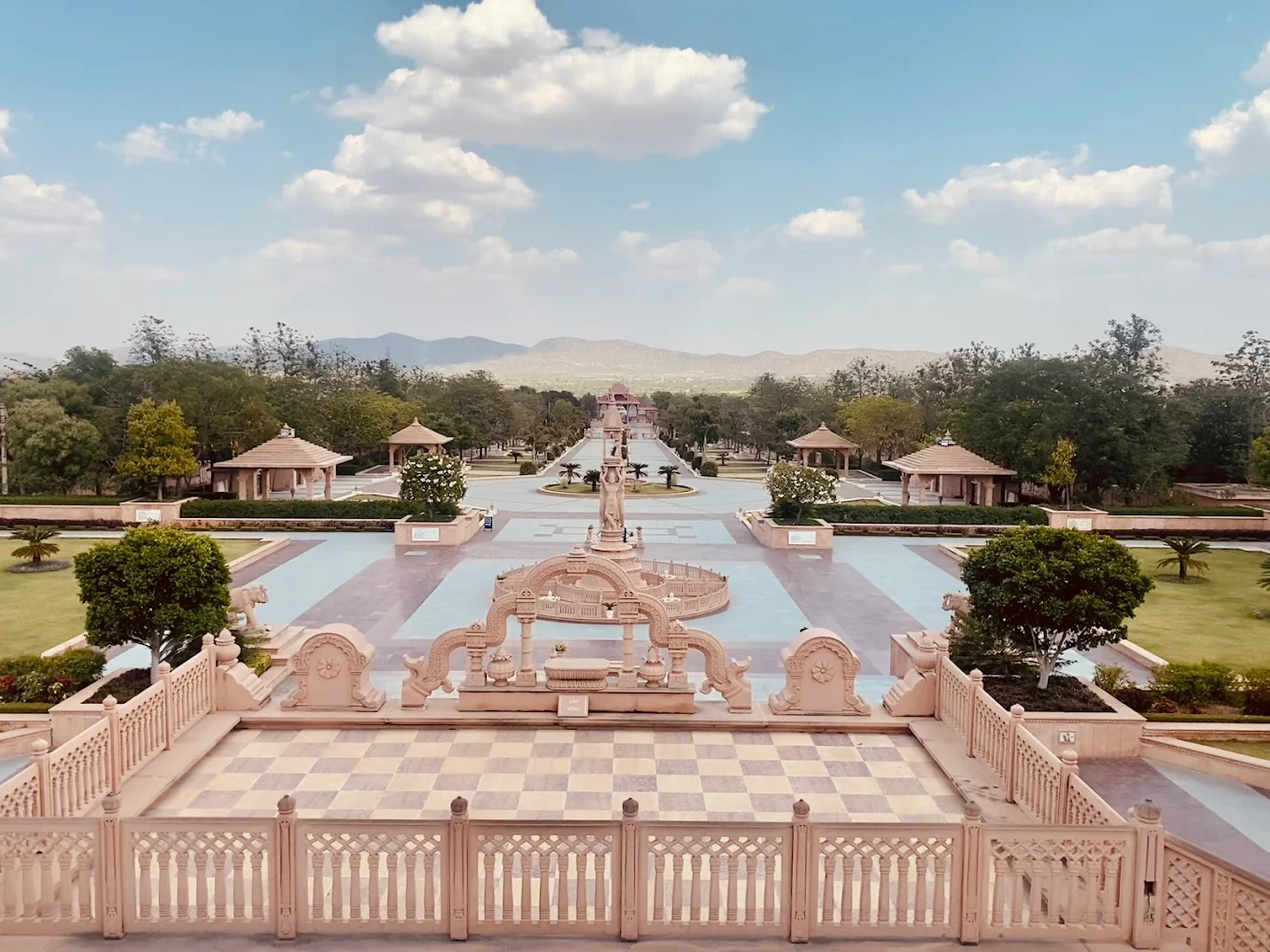
About the Temple
Officially known as Shri Gyandodaya Tirth Kshetra, this is one of the more significant modern Jain pilgrimage sites in Rajasthan. The main temple is dedicated to Lord Adinath Rishabhdev, the first of the 24 Tirthankaras in Jain tradition. The complex was developed over several decades with contributions from Jain communities across the country and was built under the guidance of Jain saints who wanted a major spiritual center near Ajmer.
What makes Nareli stand out from the older Jain temples scattered across Rajasthan is that it makes no attempt to replicate an ancient style. The architecture is deliberately contemporary, and it works the clean lines and stepped design feel intentional rather than imitative. It's a temple built for this century that still takes its religious purpose seriously.
The Architecture Up Close
The main structure is built primarily in white marble, and the craftsmanship is worth examining properly rather than just glancing at it. The carved panels on the walls illustrate Jain concepts and narratives if you take a few minutes to look carefully, you'll find figures and stories that someone familiar with the tradition will recognize immediately, and that a curious non-Jain visitor will find interesting even without that context.
The pillars inside the main hall have a symmetry and scale that feels considered rather than decorative. Grand, but not overwhelming. The open courtyards between the structures make the complex feel spacious and unhurried, which contributes a lot to why people feel calm here.
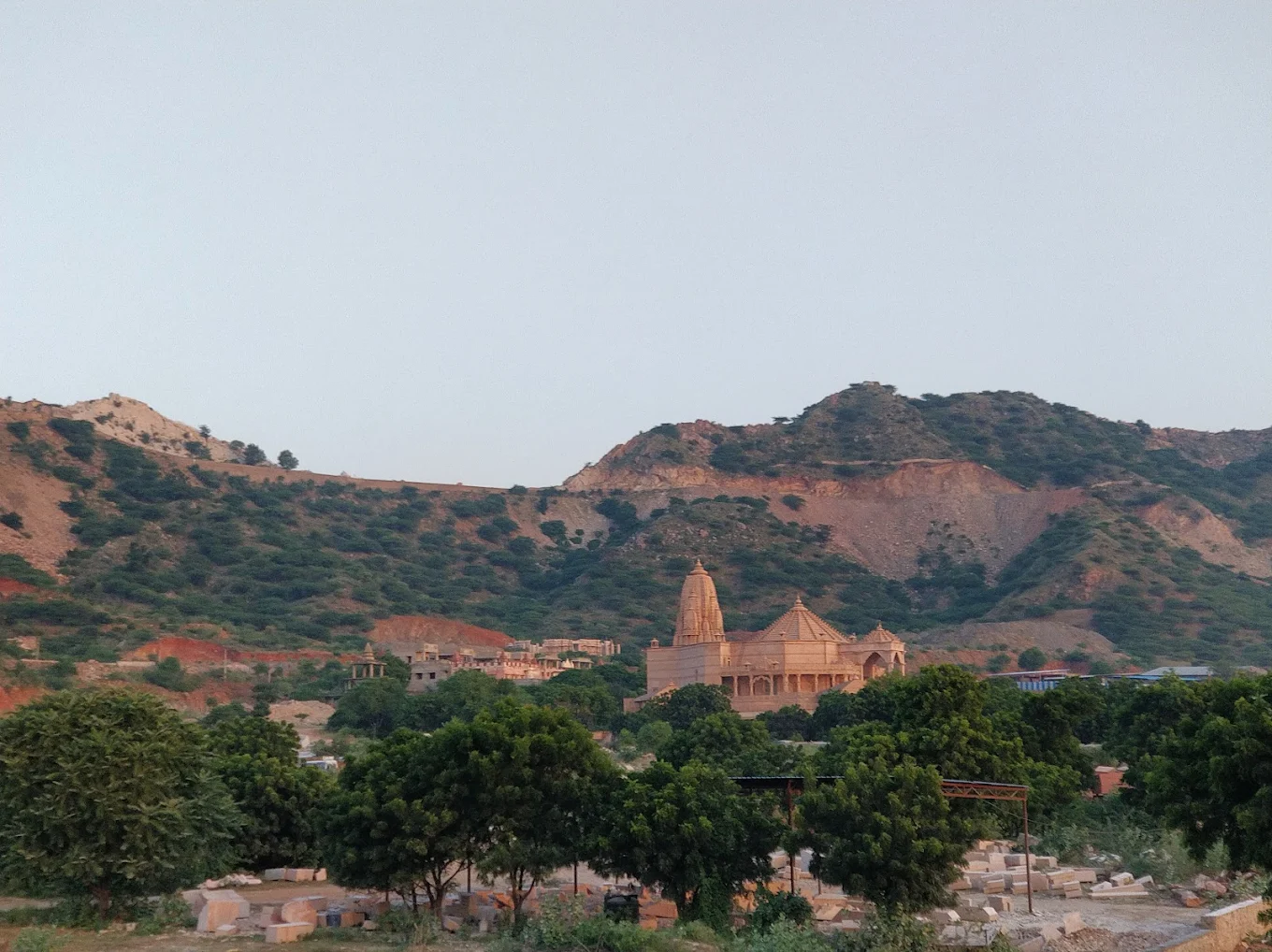
The stepped design of the main temple seen from the complex entrance
Getting Here
The temple is about 7–8 km from Ajmer's city center on the road toward Kishangarh. If you're coming from Jaipur on the NH-48, it appears before you enter Ajmer there are signs for it. Autos from Ajmer know the place well; the ride from the city center shouldn't cost more than ₹100–150 one way.
By Road
7–8 km from Ajmer city center
Auto or taxi, straightforward ride
By Train
Ajmer Junction, then auto
Well-connected from Jaipur and Delhi
By Air
Jaipur Airport, ~135 km
Or Kishangarh Airport, ~30 km
The Hill Pathway and the 24 Statues
One section of the complex that most visitors don't fully explore is the pathway up the surrounding hill to the 24 Tirthankara statues. Each of the 24 Tirthankaras in Jain tradition has a dedicated statue installed at intervals along the hillside path. The climb takes about 20–30 minutes at a comfortable pace.
The views from the upper section are genuinely good on a clear winter morning, you can see Ajmer city spread below with the outline of Ana Sagar Lake visible in the middle distance. The Dargah area is identifiable too if you know what you're looking for. It's a perspective on Ajmer that most visitors never get because the usual tourist circuit stays in the city.
The pathway is manageable for most people but does involve some incline. Wear shoes you can walk in not sandals and carry water.
Best Time to Visit
October to March is the comfortable window
Ajmer summers are serious April onward, the heat in this part of Rajasthan gets difficult. The marble reflects a lot of light and by noon in summer the complex can feel oppressive. Winter is the right choice.
Time of day: Weekday mornings between 7 and 10 AM are ideal the light is good for photographs, the temperature is comfortable, and the crowds are thin. Weekends see more pilgrims and school groups. The evening atmosphere has its own quality if you want to see the temple lit up, but the hill pathway is better done in daylight.
Time to budget: An hour covers the main temple and courtyard. Add another 45 minutes if you're doing the hill walk to the Tirthankara statues. Don't rush the hill the views at the top are worth lingering for.
A Few Photos from the Complex
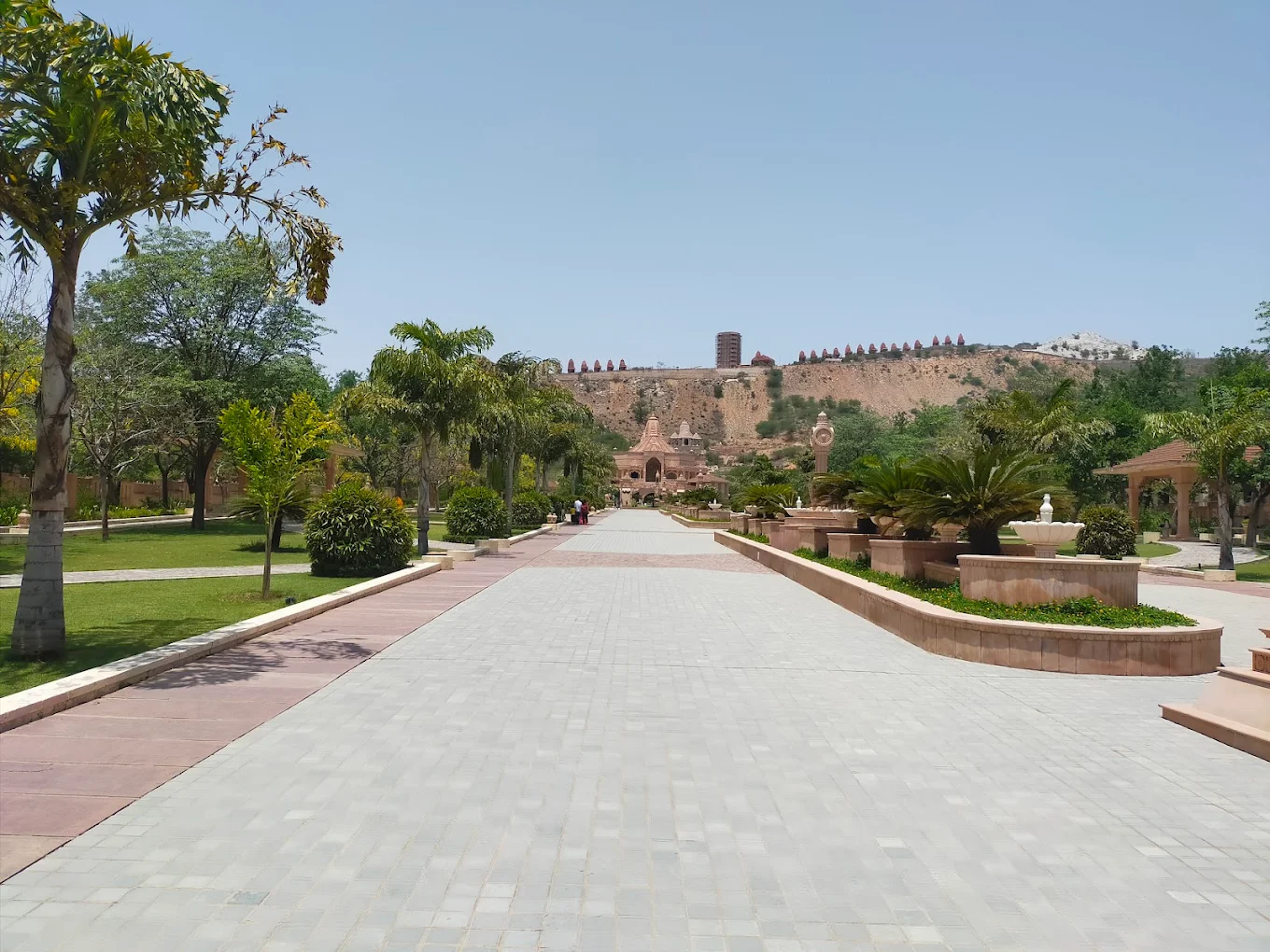
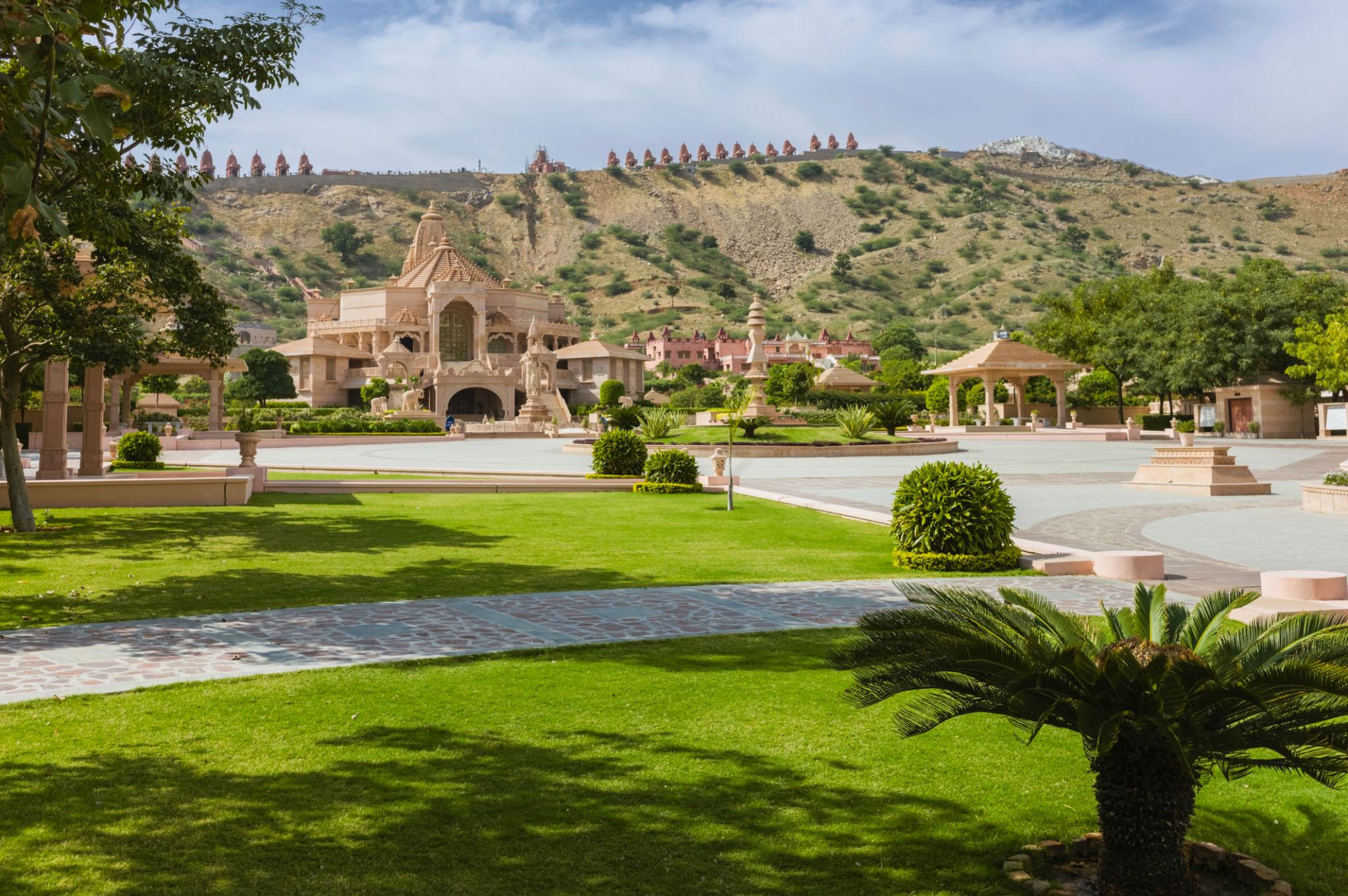
The temple photographs well at almost any time of day given the white marble and open design:
Visiting Practically
Temple Guidelines
- Dress conservatively: This is an active place of worship. Covered shoulders and knees are expected and respectful.
- Remove footwear: At the temple entrance, before the main premises.
- Keep noise down: The quiet atmosphere is part of what makes this place worth visiting don't disrupt it for others.
- Photography inside the sanctum: Check with the temple staff. Rules can vary by section and by time of day.
- Follow temple instructions: The staff are helpful and approachable if you have questions.
Practical Tips
- Water for the hill walk: There's no vendor on the hill pathway. Carry at least 500ml per person.
- Footwear strategy: Wear shoes you can walk in but also slip off easily you'll be removing them at the main temple and possibly at individual shrines on the hillside too.
- Sun protection on the pathway: The hill walk is largely exposed. Hat or umbrella in summer or late morning.
- The city view: The best panoramic viewpoint is roughly two-thirds of the way up the hill, not at the very top. Don't give up before you get there.
- Auto from Ajmer: Ask for "Nareli Jain Mandir" most drivers know it immediately.
Worth Stopping For
Nareli is the kind of place you visit expecting a quick half-hour stop and end up staying for two hours. The combination of genuinely interesting architecture, a manageable hill walk, and a view of Ajmer that most tourists never see makes it worth prioritizing over some of the more-visited sites in the area.
If you're in Ajmer for the Dargah and looking for one more thing to do, this is the right call. It offers something completely different quieter, less crowded, architecturally distinct and it takes less time than you'd spend waiting at a busier attraction. For more Ajmer, Bajrang Garh Temple offers a different hilltop perspective on the city, and the Kishangarh Moonland marble dump is 15 minutes further along the same highway.
Personal Experience
Reaching roughly two-thirds up the hill path, where the view of Ajmer and Ana Sagar Lake suddenly opens up, is a moment most visitors who stop at the main temple never get to experience.
How Much It Costs (Budget Breakdown)
- Auto from Ajmer city center: ₹100–150 one way
- Entry: free (main temple and hill pathway)
- Water and snacks: ₹30–50
- Typical round-trip cost including auto: ₹250–350
Parking Experience
Free parking is available right at the temple complex, rarely crowded except on major Jain festival days.
Crowd Timing
Weekday mornings (7–10 AM) are quiet. Weekends bring more pilgrims and school groups, especially by late morning.
What to Avoid
Don't skip the hill walk assuming the main temple is all there is. Don't wear sandals for the hillside path. Don't rush past the two-thirds point on the climb that's where the best view is, not at the very top.
Hidden Spots
The viewpoint at roughly two-thirds up the hill path is often overlooked by visitors who turn back too early or push straight to the summit without pausing.
Local Food to Try
No food stalls on site carry water for the hill walk and eat in Ajmer city before or after. Nothing is available right at the temple.
Is It Suitable for Families?
The main temple and courtyard are easy for all ages. The hill walk to the 24 statues is moderate and fine for most families, though very young children or elderly visitors may prefer to skip that portion.
Best Photography Points
The stepped white marble facade from the complex entrance, the carved panels up close, and the panoramic view of Ajmer and Ana Sagar Lake from partway up the hill path.
Frequently Asked Questions
Is Nareli Jain Temple free to visit?
Yes, entry is free for all visitors. There is no admission charge for the main complex or the hill pathway to the 24 Tirthankara statues.
Can non-Jains visit Nareli Jain Temple?
Yes. The temple welcomes visitors of all faiths. Dress conservatively (covered shoulders and knees), remove footwear before the main premises, and keep noise levels down the usual expectations at any active place of worship in India.
What are the timings of Nareli Jain Temple, Ajmer?
The temple is generally open from around 6 AM to 7 PM daily. Timings can vary on festival days. The hill pathway is better done in daylight allow at least an hour for the round trip to the Tirthankara statues and back.
How long does a visit to Nareli take?
One hour covers the main temple and courtyard. Add another 45 minutes to an hour for the hill walk to the 24 Tirthankara statues and time at the viewpoint. Total: 1.5 to 2 hours for the full experience without rushing.
Is photography allowed at Nareli Jain Temple?
Exterior and courtyard photography is generally permitted. Inside the main sanctum, check with temple staff before photographing rules can vary by section and time of day. Photography on the hill pathway is generally fine.

My Rajasthan Vlog
Travel Writer & Rajasthan Explorer
Writing about Rajasthan from inside the state the temples, forts, and landscapes that don't always make it into the standard travel itineraries, alongside honest accounts of the ones that do.